“What courses LTELs take, the programs they are a part of and the information they have access to—their socio-academic position within a school, all contribute to their ability to successfully complete high school and go on to college.” Fernandez (2014)
Tweet
Challenging Systemic Barriers and Advancing Multilingual Education Through MEDALLA: Hacia Nuevos Conocmientos y Espacios Lingüísticos
Jen Stacy, Nallely Arteaga, Yesenia Fernández, Elexia McGovern-Reyes, Pablo C. Ramirez
ABSTRACT
In California, multilingual (ML) teachers seeking Bilingual Authorization or ongoing professional development must confront the field’s sedimentary tensions. Cultivating culturally sustaining approaches to language learning in PreK–12 school communities requires embedding humanizing practices at the core of ML teacher education and professional development. Project MEDALLA (Multilingual Educator Development Advancing Language Learning Achievement/Activism) is based at a Hispanic-Serving Institution in Los Angeles. This article delineates MEDALLA’s unique approach to bilingual teacher education, which fosters biliteracy and critical family–school relations while generating networks of educators committed to transformation. Informed by critical frameworks that unabashedly commit to sustaining students’ and families’ identities/knowledge and to thwarting oppressive ideologies, we describe how MEDALLA provides pathways to Bilingual Authorization and structured professional development for pre- and in-service teachers of color. The project’s innovative methods include conducting grant activities in Spanish (the partner language), integrating critical bilingual family literacy, developing a year-long Plurilingüe Teacher Fellowship for mentor teachers, creating a holistic student teaching model, and strengthening partnerships. We believe that Project MEDALLA provides a model for supporting teachers’ critical practices that advance students’ and families’ language and academic goals while building solidarity. READ HERE
Professional Development for In-Service Dual Language Teachers
By CSUDH Colectivo Plurilingüe
ABSTRACT
Dual language (DL) education programs directly challenge schools’ role in settler-colonial projects and, as such, today’s DL teachers are called to enact critical, anticolonial practices founded upon contemporary language theories that are culturally and linguistically sustaining and support rich content learning. This chapter first situates DL teachers’ professional development (DLPD) within current sociopolitical context and then examines the contemporary research about DLPD. Dominant, neoliberal framing of DL education recognizes multilingualism as the development of transactional skills instead of as sustenance of identities, cultures, and community cultural wealth. Most DLPD has been interwoven with these neoliberal structures, privileging interest convergence and English learning. To be in line with DL teachers’ realities and needs, DLPD must be situated within complex, ideological, sociopolitical frameworks and make this messy reality a central component in DLPD to foster critical consciousness and activism. An ideological shift must take place to align DLPD in solidarity with the movement for linguistic justice and to fully embrace the liberatory potential of DL education. This chapter suggests a critical approach to DLPD that is dialogical and anticolonial, centers teachers’ community cultural wealth and healing on their path toward ideological clarity, and foments activist networks. READ HERE
El Instituto: Centering Language, Culture, and Power in Bilingual Teacher Professional Development
By Jen Stacy Ph.D., Yesenia Fernandez, Ph.D, Elexia Reyes McGovern, Ph.D.
ABSTRACT
Teacher education programs have the obligation to prepare bilingual teachers, new and established, to challenge pervasive deficit and racist ideologies, to cultivate students’ identities/knowledges, and to thwart oppressive ideologies through counter-hegemonic discourses. This paper presents a case study of El Instituto, one Hispanic Serving Institution’s immersive professional development program for Spanish-speaking bilingual teachers in Los Angeles County. Conducted entirely in Spanish, the program aimed to center teachers’ sociocultural realities and community cultural wealth while honoring their linguistic capital, deepening their Spanish-language knowledge, and developing critical consciousness. Findings suggest that utilizing a sociocultural approach to simultaneously study Spanish language and critical pedagogy while centering teachers’ community cultural wealth led to deep insights about intersections of languages and culture within larger power structures that cultivate systemic oppression. However, epistemological shifts about fostering more humanizing and critical professional development for bilingual educators are necessary to achieve these goals. READ HERE
Read In Dialogue/ En Diálago Here
“La Travesia de un Alumna Aprendiz de Ingles a lo Largo de la Educacion Basica en los Estados Unidos”
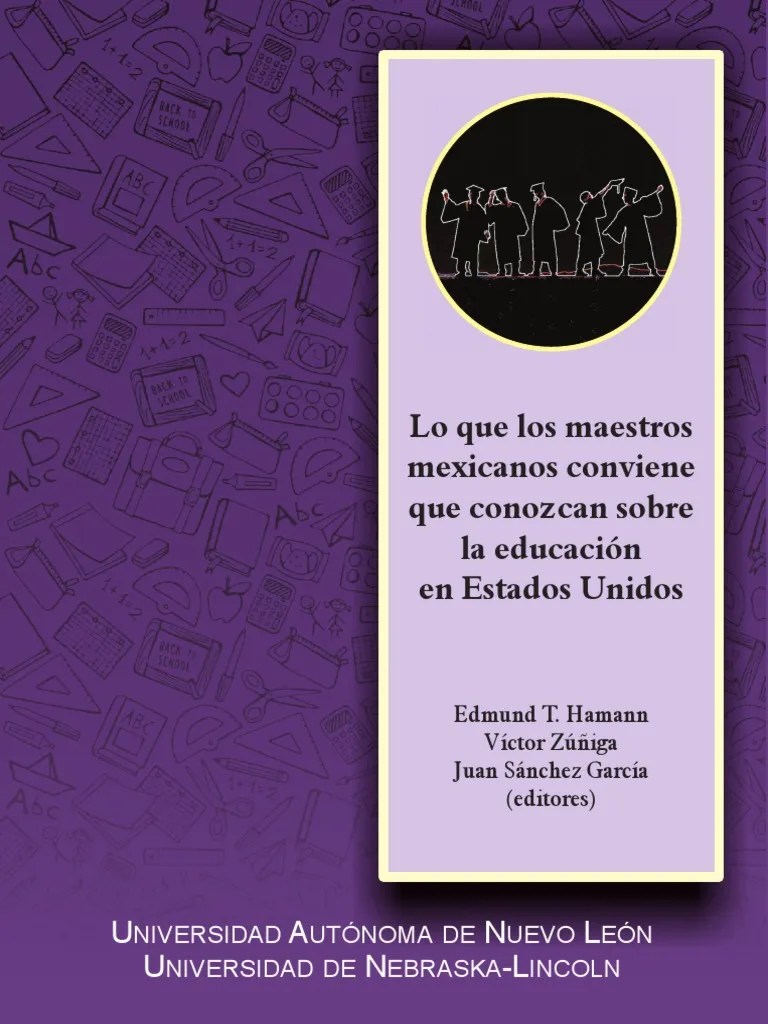
The “Socio-Academic” Positioning of English Learners in High School: Implications for Policy and Practice
By Yesenia Fernández, Ph.D., The Claremont Graduate University, 2014
ABSTRACT
In many cases, Long Term English Learners (LTELs) have attended U.S. schools from the time they were in Kindergarten yet they never shed the label, continue to languish academically, and experience unequal academic outcomes as a result of remedial curricular track placement in schools. Decision-making by personnel guided by federal and state mandates has let to LTELs being positioned in schools in a way that deliberately excludes them from accessing critical social capital that may change their educational trajectories. What courses LTELs take, the programs they are a part of and the information they have access to—their socio-academic position within a school, all contribute to their ability to successfully complete high school and go on to college. This Social Network Analysis study involves secondary datasets from an urban school districts’ student information system and surveys of eleventh and twelfth graders at one comprehensive high school. Quantitative analysis of course level and student achievement data as well as student survey responses related to student connectedness in the social network of the school and their ties to intuitional agents, serve to illuminate how LTEL A-G college preparatory course enrollment as well Advanced Placement and Honors program participation ultimately impact LTEL educational trajectories beyond high school….
Social Networking Technology and the Social Justice Implications of Equitable Outcomes for First-Generation College Students
By Yesenia Fernandez, Ph.D., Nancy Deng, Ph.D., & Meng Zhao, Ph.D.
ABSTRACT
First-generation college student (FGCS) persistence and attainment has become key in ensuring social justice and equity on college campuses. However, a critical aspect of FGCS success, access to technology and social technology use as a tool,
have not been central to the strategies implemented by post-secondary leaders to improve FGCS outcomes. Digital divide authors point out there is not only unequal access to technology but also differentiated use by socio-economic status when it
comes to using it to access valuable information sources (DiMaggio et al, 2004; Hargittai, 2010). In addition, Martinez-Aleman, Rowan-Kenyon, and Savitz-Romer (2012), and Wohn et al (2013) discuss how social networking technologies can be
tools to support FGCS persistence. Through this qualitative study informed by social capital and social network theory, we examine the type of social ties (family, friend, institutional) and institutional resources that social media use enables FGCS to strengthen or build. We discuss the promising use of social networking technology to expand students’ access to information networks and social capital which is critical to persistence. Finally, we underscore how the equitable access to technology has social justice implications when it comes to the post-secondary outcomes of
first-generation college students.
The first-year seminar as a vehicle for belonging and inclusion for underrepresented college students
By Keisha C. Paxton, , Yesenia Fernández, Joanna B. Perez
ABSTRACT
This chapter describes a disciplinary-focused first-year seminar program at a minority-serving and Hispanic-serving state university where nearly two-thirds of students are first-generation college students. These seminars provide students with the opportunity to work closely with faculty, explore an exciting topic, engage in co-curricular activities, receive academic and whole-person support, and begin to develop a sense of belonging. The program focuses on the paired goals of promoting student engagement and reducing the number of students who drop by providing ongoing faculty development to the professors who teach these seminars. Faculty introduce students to their discipline and integrate essential college success skills and general education concepts in small class settings to foster group cohesion. This chapter details the following components of the program: integrating disciplinary study with “college knowledge,” guiding students to develop both a present and future goal orientation, maintaining targeted and ongoing faculty development focused on creating educational environments and experiences that foster belonging and inclusion for first-year students, and collaborating with existing programs to support students’ acclimation to university life. The chapter concludes with case studies and lessons learned for building a first-year seminar program tailored to support first-generation and underrepresented college students’ sense of belonging in college. READ HERE
Social media use by first-generation college students and two forms of social capital: a revealed causal mapping approach
By Nancy Deng, Ph.D., Yesenia Fernandez, Ph.D., & Meng Zhao, Ph.D.
Abstract
Purpose: The purpose of this study is to examine social media use and its impacts on first generation students by answering the two questions: how do FGS use social media on college campuses, compared to their peers? How does the use of social media affect their academic experiences?
Design/methodology/approach: This qualitative study adopted social capital theory as a sensitizing framework for understanding the social media (SM) use and the resources valued by first-generation students (FGS) and used a revealed causal mapping method to analyze the narratives of 96 informants to identify key constructs and linkages on SM use and perceived outcomes.
Findings: The revealed causal mapping (RCM) analysis revealed nine key constructs that shaped the SM use and academic experience of FGS and their peers. The linkages among the nine constructs: three types of social capital (bridging, family bonding and friend bonding), three types of SM use (social, cognitive and hedonic) and three outcomes (academic support, emotional support and distraction to work) were different between FGS and their peers. Among FGS, SM use and perceptions differed by gender.
Originality/value: Leveraging social media is critical for universities to enhance FGS persistence, yet knowledge remains limited. This study showed FGS differed from their counterparts in the SM use and perceptions. Among FGS, the SM use and perceptions differed by gender. The research contributions are: (1) SM technology can empower FGS by building social capital, impacting their academic experiences and psychological well-being and (2) the intersection of gender and student generation status is worth investigation. This paper enriches FGS research by proposing a model of SM use and social capital.
The Intersectionality of Race, Gender, and Urban Leadership: Four School Leaders (Re)constructing Self and Identity
By Yesenia Fernandez, Ph.D. Kitty M. Fortner, Ed.D., Antonia Issa Lahera, Ed.D., and Anthony H. Normore, Ph.D.
ABSTRACT
Narrative inquiry embraces narrative as both the method and phenomena of study. As Connelly and Clandinin (1990) put it, “People by nature lead storied lives and tell stories of those lives, whereas narrative researchers describe such lives, collect and tell stories of them, and write narratives of experience” (p. 2). The following is the narrative of our stories, the stories of how we became urban school leaders who, through a (re)construction of self and identity, ultimately use our positions of power to advocate for just and equitable schools. These are our testimonios—literally translated as testimony—which can be defined as “a narrative that conveys personal, political, and social realities. One’s testimonio reveals an epistemology of truths and how one has come to understand them” (Delgado Bernal et al., 2012, p. 364). These narratives, though not all from the perspectives of persons of color, are all from perspectives of leaders who are frequently marginalized as a result of being advocates for justice and equity in spaces where that is often not accepted. These narratives are the testimony of our journeys, our (re)construction of self as social justice leaders in urban schools.
 estoy desgranando